Opinion: The SoZa case shows why buildings should have rights

Ana Pereira Roders
Published: De Architect, March 25, 2026
People have rights. States have rights. Companies have rights. Even nature is increasingly being granted rights, with an international movement that is also growing in the Netherlands. Ana Pereira Roders asks herself: why don't buildings have rights? Because every minute, a building is demolished in Europe, despite the European Climate Law. Her conclusion: fundamental rights were never self-evident - they were always fought for.
Buildings are objects of our creativity, our society, our property, our heritage. We determine when their lives end. Their condition doesn't matter. If we consider them worthless, unsustainable, ugly, useless, fake, outdated or degraded, we may demolish them freely. For this, we only need a demolition permit, which is almost always granted.
Buildings are only protected from demolition if they are designated as heritage. In 2022, States committed - within the framework of the UN Kunming-Montreal Global Biodiversity Framework - to increasing the protection target from 17 percent to 30 percent by 2030. Yet the cultural heritage sector has no figures at hand and not even a target.
According to Statistics Netherlands (CBS), only 0.67 percent of the Dutch building stock is a national monument. A meager number, although undoubtedly more buildings are protected within conservation areas - in urban and rural contexts - and as municipal monuments - but CBS doesn't count those.
Every minute a building disappears in Europe. That's 1,440 per day, 525,600 per year
But solid demolition figures do exist. Every minute a building disappears in Europe. That's 1,440 per day, 525,600 per year. Buildings that often don't reach their full lifespan, even though they could have. In doing so, we deny these buildings the chance to become 'superheroes' of the built environment. Just like the Pantheon in Rome or the Maison Carrée in Nîmes – both in use for more than two millennia, which is forty times longer than Life Cycle Assessment standards prescribe.
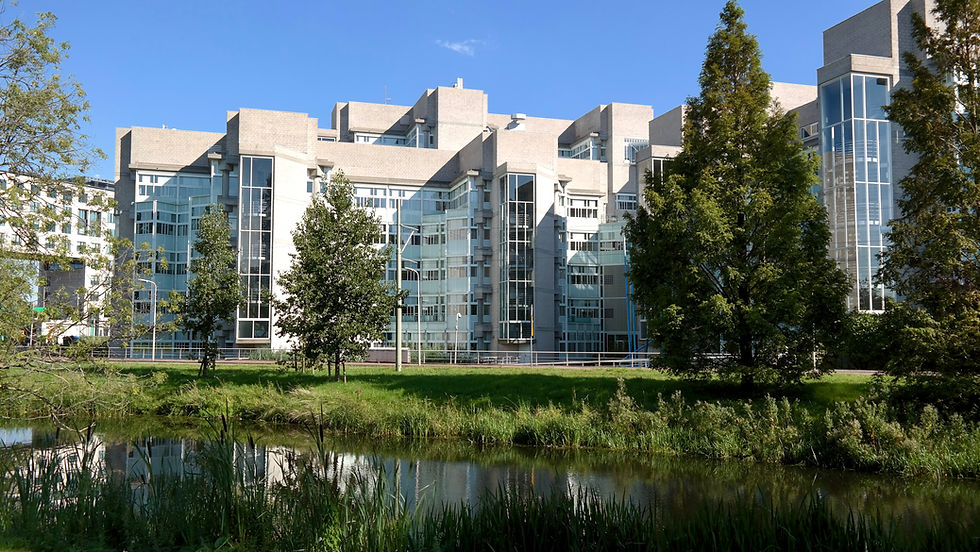
SoZa, the former Ministry of Social Affairs and Employment in The Hague, will be part of those demolition statistics in 2026. Even though SoZa is a young building, only completed in 1990. Even though SoZa is an extraordinary building, designed by an extraordinary architect. Even though the demolition is widely contested by various heritage communities. Even though renowned architects have proposed various renovation alternatives. Even though a petition was massively signed and submitted to the House of Representatives. Even though SoZa was selected as one of the 14 most endangered heritage sites of 2026 in Europa Nostra's '7 Most Endangered' program. Even though such demolition decisions disrespect the objectives set out in international treaties, such as the Paris Climate Agreement, the European Climate Law, and the revised Energy Performance of Buildings Directive.
Why? Because it's legally possible, because buildings have no rights.
SoZa is not official heritage and the Municipality of The Hague refused to let it become a monument. And so, SoZa is fair game.
I feel - after twenty years of research, collaborating with governments and training new generations - disappointed in our society and above all in our field. Hundreds of scientific publications make the connection evident between heritage and sustainability, conservation and development, cultural significance and building redesign. And yet I couldn't help protect SoZa.
So I tried something different. I wrote a fiction book in which SoZa literally gets a voice. Together with old and new friends, SoZa discovers the Universal Declaration of Human Rights and fights for his survival. A humorous, philosophical and accessible book – because irony and humor sometimes get us further than any research article or lecture. Spoiler: in the book, SoZa wins the fight for his survival. That ending is fiction, but it doesn't have to remain so.
Fundamental rights were never self-evident – they were always fought for. Buildings cannot speak. But we can speak for them. Will you join?
Ana Pereira Roders, SOZA: The Untold Story of an Extraordinary Building and the Fight for His Rights, available on Amazon from €14.99.
Earlier Articles at De Architect


Comments