SAVE SOZA · STOP DEMOLITION · RENOVATION FIRST
Updated: May 5
Petition Text 2026 (UK)
The former Ministry of Social Affairs and Employment building complex in The Hague, SoZa, was designed by Herman Hertzberger in 1979, and was in use as a government building from 1990 to 2016. SoZa is internationally recognised as an icon of Structuralist architecture, with its visionary design already accounting for future uses. In a time when very few spoke of sustainability and circularity, this is a pioneering example of sustainability ahead of its time!
The monument status was denied to the building by the Municipality of The Hague. Although structurally sound and adaptable by design, SoZa’s fate is that its owner, VORM, plans to demolish it, and the Municipality is facilitating this by granting an environmental permit for the new building plan.
We want to make a final attempt to prevent demolition works from starting this summer.
Dutch Law is dangerously permissive: the demolition of unlisted buildings requires only notification and can start after 4 weeks. Heritage designations are the only legal instrument that can prevent demolition. A compelling and relevant example of timely ministerial intervention is the designation of the Olympic Stadium by Jan Wils as a National Monument. Despite heavy pressure from the Municipality of Amsterdam to demolish it quickly for housing construction, this stadium was definitively saved in 1992, when the Minister urgently placed it on the National Monument list.
The Dutch Council of State's Annual Report 2025, "Right to the Future", addresses the consequences of government decisions for the living climate of future generations, and the respective obligations. Voters and politicians tend to favour policies that benefit the current generation. "In short, there is a certain tyranny of the present." Under articles (20 and 21) of the Constitution, government care must extend to the security of existence and living environment of future generations. The Netherlands has no direct anchoring in the Constitution in this regard, but nevertheless, the Council concludes: "However, it is clear that the obligations to 'promote' and 'take care of' may not be reversed into their opposite, i.e., obstruct, neglect or disregard."
We call on three Ministers to fulfil the Netherlands’ treaty obligations: · Rianne Letschert, Minister of Education, Culture and Science, to refrain from acts that would defeat the object and purpose of the Faro Convention, to recognise the heritage community of SoZa, to designate it as a National Monument, and to consider expanding the Post-65 programme in recognition of heritage community values. · Stientje van Veldhoven-van der Meer, Minister of Climate and Green Growth, to uphold the Paris Agreement and the European Climate Law, require an embodied-carbon assessment for SoZa’s demolition and new-building plan, and consider extending this requirement to all environmental permits. · Elanor Boekholt-O'Sullivan, Minister of Housing and Spatial Planning, to uphold the Energy Performance of Buildings Directive, to reinstate the disappeared condition of renovation, to enable an international design competition for renovation alternatives, and to integrate the practice of comparing embodied-carbon assessments between renovation versus demolition-and-new-build plans into future permits. |
Once demolished, neither SoZa, its heritage community, nor the planet can be restored. By signing this petition, we aim to help SoZa and set a precedent where heritage communities are heard, future generations are safeguarded, and global commitments are respected. Premature demolition blocks climate neutrality. Renovating and reusing buildings like SoZa brings climate neutrality closer, while preserving our heritage.
Together we make sustainability and the respect for everyone’s heritage “the New Normal”!
To Rianne Letschert, Minister of Education, Culture, and Science
The Heritage Law grants the Minister of Education, Culture, and Science (OCW) the legal authority to designate buildings as National Monuments.[1] SoZa has not yet received this designation, despite repeated and sustained requests to list SoZa as a National Monument from an active heritage community, as formally defined under the Faro Convention. A heritage community including over 560 built environment professionals, multiple heritage organisations, and international bodies, including Europa Nostra. In March 2024, a petition was submitted to the Dutch House of Representatives.[2] In February 2026, the Advisory Panel of Europa Nostra's 7 Most Endangered Programme preselected SoZa as one of the 14 most endangered heritage sites in Europe[3].
The Cultural Heritage Agency of the Netherlands (RCE), acting on behalf of the Minister of OCW, currently operates a Post-65 heritage programme (1965-1990) targeting only 150 national monuments, when this period represents about a third of the current Dutch building stock, and participatory processes with heritage organisations, municipalities, citizens, and RCE specialists identified a potential list 10 times longer.[4] A careful process, but it proceeds so slowly that the most prominent buildings do not receive protected status in time and are demolished. SoZa faces this risk.
The Netherlands signed the Faro Convention on 10 January 2024, which recognises heritage rights as human rights and establishes collective responsibility for heritage conservation.[5] The Convention requires taking into consideration the values each heritage community conveys to the cultural heritage with which it identifies.[6] Ratification must still follow, but even as a signatory state, the Netherlands is required, according to the Vienna Convention on the Law of Treaties, to refrain from acts that would defeat the object and purpose of a treaty.[7]
SoZa is a globally recognised icon of Structuralist Architecture, a unique and pioneering government building complex of the Post-65 period. Proceeding with the demolition of SoZa, ignoring its heritage community, while the Faro Convention awaits ratification, would defeat the object and purpose of this Convention.
We call on the Minister of Education, Culture, and Science to refrain from acts that would defeat the object and purpose of the Faro Convention, to recognise the heritage community of SoZa, to designate it as a National Monument, and to consider expanding the Post-65 programme in recognition of heritage community values.
[1] Article 3.1(1) of the Heritage Law of 9 December 2015, Staatsblad 2015, 511, states: "Our Minister may decide ex officio to designate a monument or archaeological monument that is of general importance due to its beauty, scientific significance, or cultural-historical values as a national monument".
[2] Floortje Keijzer presented a urgent letter/petition (brandbrief) to the Dutch Board of Representatives (Tweede Kamer) and requested to list the SoZa building as a National Monument (Rijksmonument) in March 2024. For more info: https://www.volkskrant.nl/columns-opinie/opinie-soza-verdient-niet-de-sloophamer-maar-status-van-rijksmonument~bef7c1a5/
[3] Anneke de Gouw, Rupert van Heijningen & Joop ten Velden have submitted SOZA to the 7 Most Engangered Programme, representing two NGOs -Heemschut and Vrienden van Den Haag - and the local community. Europa Nostra has shortlisted SOZA to the 14 most endangered heritage sites in Europe. For more info: https://www.europanostra.org/fourteen-cases-of-heritage-at-risk-in-europe-preselected-for-2026/
[4] Steunpunt Cultureel Erfgoed Noord-Holland, " Tips and Takeaways from the Heritage Support Team: Redevelopment of Post-65 Heritage – Challenges and Opportunities," 24 September 2025 ("Ongeveer 40% van de gebouwde omgeving in NL stamt uit 1965–1990").
[5] Article 1(b) of the Council of Europe Framework Convention on the Value of Cultural Heritage for Society (Faro Convention), recognises heritage rights as fundamental human rights, establishes individual and collective responsibility for heritage, and emphasises heritage conservation as essential for human development, quality of life, and democratic society.
[6] Article 2(b) of the Faro Convention defines a "heritage community" as consisting "of people who value specific aspects of cultural heritage which they wish, within the framework of public action, to sustain and transmit to future generations." This definition recognizes heritage communities as self-defining groups formed around shared cultural values, rather than requiring official designation or ethnic identity.
[7] Article 18 of the Vienna Convention on the Law of Treaties (Vienna, 23 May 1969, United Nations Treaty Series, vol. 1155, p. 331) establishes the obligation of signatory states to "refrain from acts which would defeat the object and purpose of a treaty" between the time of signature and ratification. This interim obligation is applicable to the Netherlands from the date of signing the Faro Convention (10 January 2024) until ratification or a clear indication not to become a party. The object and purpose of the Faro Convention is the value of cultural heritage to society, and to support the heritage communities and their heritage.
To Stientje van Veldhoven-van der Meer, Minister of Climate and Green Growth
The Netherlands has committed to net-zero gas emissions by 2050 under the Climate Act[1], the Paris Agreement[2], and the European Climate Law[3], which require that all policy climate-related decisions align with carbon neutrality by 2050. Yet, the Dutch Government has recently chosen to slow down the decarbonization of the building sector from -3.0% (2015-2022) to -1.0% annually (2022-2030).[4]
Demolishing 56,000 m² of structurally sound reinforced concrete generates avoidable and irreversible embodied-carbon emissions that reverse decarbonization. First, the premature demolition of a building completed in 1990 writes off the entire carbon investment and disables the payoff of nearly four decades of embodied carbon: emissions from material extraction, manufacturing, construction, use, and maintenance. Second, it starts a new cycle of carbon emissions from demolition and new building activities.
An Environmental Impact Assessment[5] was conducted for the new building project. However, the Environmental Assessment Commission identified critical gaps: no alternatives were compared, including renovation versus demolition-and-new-building scenarios. The EIA assessed only the operational emissions from the proposed new building plans, omitting the embodied-carbon impact of demolishing 56,000 m² of reinforced concrete. No embodied-carbon assessment was conducted or submitted to the Municipality of The Hague comparing demolition and new-building plans with renovation plans.
The EU Environmental Impact Assessment Directive (2014/52/EU) requires Member States to assess the significant environmental effects of major development projects, including consideration of alternatives and impacts on cultural heritage, before approval. [6]The absence of a comparative embodied-carbon assessment and heritage impact assessment for a demolition of this scale is inconsistent with both the EIA Directive and the obligations under the European Climate Law.
We call on the Minister of Climate and Green Growth to uphold the Paris Agreement and the European Climate Law, require an embodied-carbon assessment for SoZa’s demolition and new-building plan, and consider extending this requirement to all environmental permits.
[1] The Climate Act of 2 July 2019, as amended 5 July 2023, establishes binding emission reduction targets under Article 2.1: a 55% reduction by 2030 compared to 1990 levels, progressing toward net-zero greenhouse gas emissions by 2050.
[2] The Paris Agreement, adopted 12 December 2015 and entered into force 4 November 2016 (UN Treaty Series, I-54113), commits parties to limiting global temperature increase to well below 2°C above pre-industrial levels. The Netherlands ratified the Agreement on 27 September 2016.
[3] The European Climate Law, Regulation (EU) 2021/1119 of 30 June 2021 (OJ L 243, 9.7.2021) makes climate neutrality by 2050 legally binding across all Member States. Article 2(1) requires that all policy decisions—including those concerning demolition versus renovation of existing building stock—align with the climate neutrality pathway.
[4] The European Commission's assessment of the Netherlands' final national energy and climate plan documents the recent deceleration in building sector decarbonization, from -3.0% annually (2015-2022) to -1.0% (2022-2030). SWD(2025) 140 final, 11 February 2025, pp. 172-173.
[5] The Municipality of The Hague commissioned an Environmental Impact Assessment for the Anna van Hannoverstraat 4 project, adopted by the Municipal Council on 14 December 2023. The independent Environmental Assessment Commission, in its advisories of 30 May 2023 and 19 September 2023, concluded that "the instrument of environmental impact assessment was not fully utilized, because no alternatives were compared"—specifically, no comparison was made between renovation and demolition-and-new-building scenarios. Available at www.commissiemer.nl (project 3601).
[6] Directive 2011/92/EU, as substantively amended by Directive 2014/52/EU of 16 April 2014 (OJ L 124, 25.4.2014), requires Member States to conduct environmental impact assessments for projects likely to have significant environmental effects. Article 3 mandates assessment of direct and indirect effects on both climate and cultural heritage, with explicit consideration of reasonable alternatives to the proposed project.
To Elanor Boekholt-O’Sullivan, Minister of Housing and Spatial Planning
The revised Energy Performance of Buildings Directive (EPBD, Directive 2024/1275/EU)[1] requires Member States to prioritise renovation over demolition, under the motto “renovation first”. The Netherlands is currently finalising its National Building Renovation Plan (NBRP), due by 31 December 2026, to achieve a zero-emission building stock by 2050.[2]
SoZa is structurally sound and adaptable by design, reflecting its Structuralist principles, which prioritise giving users the freedom to adapt spaces over time. Key attributes include sixteen octagonal towers on a regular structural grid that can be reduced or expanded as needed, the separation of the load-bearing structure from demountable interior partitions, and a multi-story internal circulation network supporting multiple uses.
When the Dutch Government sold SoZa to private investors, the renovation of this building complex was established as a condition of sale. This was fully in line with its recognised quality, as assessed by Jo Coenen, the Chief Government Architect (2000-2004). In its 2004 publication ‘The responsible Dutch Government Buildings Agency’, Coenen selected SoZa amongst the 50 examples of most inspiring Dutch Architecture. However, the condition for renovation somehow disappeared when the new owner acquired SoZa. The Municipality of The Hague granted the environmental permit for the new building plans and amended the zoning plan, thus condemning SoZa to demolition.
The feasibility of renovation requires that programmes be aligned with building capacity, rather than imposing predetermined programmes on existing buildings and concluding that they are incompatible when they don’t fit. Renowned architects, including Herman Hertzberger, have already proposed renovation alternatives. Moreover, a TUDelft research, developed in collaboration with Rotor DB already in 2017, confirmed SoZa’s great potential for deconstruction and reuse. The Netherlands is a global leader in renovation, both in the heritage and circularity fields, in research and practice. Demolishing the SoZa dishonours this expertise.
The renovation alternatives have at no point been officially compared by an independent body to the demolition-and-new-building plan. This demonstrates a lack of respect for both the Dutch government's original sale condition and for the EPBD's renovation-first principle, as well as for the objectives of the National Building Renovation Plan. A comparative assessment of renovation versus demolition of SoZa would provide a valuable demonstration case for the NBRP, showing how the EPBD's renovation-first principle can be applied to large utility buildings and can promote circular principles that go beyond waste management in construction and demolition. An international design competition that includes an embodied carbon assessment would help achieve the 2050 targets. Demolishing SoZa sets the opposite precedent.
We call on the Minister of Housing and Spatial Planning to uphold the Energy Performance of Buildings Directive, to reinstate the disappeared condition of renovation; to enable an international design competition for renovation alternatives, and to integrate the practice of comparing embodied-carbon assessments between renovation versus demolition-and-new-build plans into future permits.
[1] Directive (EU) 2024/1275 of the European Parliament and of the Council of 24 April 2024 on the energy performance of buildings (recast), OJ L, 2024/1275, 8.5.2024 (Energy Performance of Buildings Directive - EPBD). This directive entered into force on 28 May 2024 and must be transposed into Dutch national law by 29 May 2026. It establishes minimum energy performance standards for buildings and requires Member States to prioritize renovation over demolition to achieve the EU's 2050 decarbonisation goals. Article 9 requires Member States to establish national building renovation plans demonstrating how renovation will be prioritized. The directive's recitals explicitly state that "triggering and supporting building renovation, including a shift towards emission-free heating systems, is therefore a key goal of this Directive" and that "at the current pace, the decarbonisation of the building sector would require centuries." The renovation-first principle is central to meeting EU climate obligations.
[2] National Building Renovation Plan, Draft dated 23 March 2026, Ministry of Housing and Spatial Planning. Under Article 3 of the EPBD, the Netherlands is required to submit a draft NBRP by 31 December 2025 and a final NBRP by 31 December 2026. The plan must demonstrate pathways to achieve a zero-emission building stock by 2050, including renovation targets for approximately 330,000 utility buildings (utiliteitsgebouwen). The draft NBRP addresses circular demolition and high-quality treatment of construction and demolition waste in accordance with EU Waste Framework Directive 2008/98/EC, particularly regarding the waste hierarchy and circular economy objectives. SoZa, as a large utility building of 56,000 m², falls within the scope of buildings that the NBRP must address.
Initiators of the Petition and First 50 Signatories (ordered alphabetically)
1. Ana Pereira Roders, Professor in Heritage and Values, UNESCO Chair on Heritage and the Reshaping of Urban Conservation for Sustainability, TUDelft, The Netherlands
2. Ana Tostões, Professor of Architectural History and Theory, Instituto Superior Técnico and Former President DOCOMOMO International, Portugal
3. André Thomsen, Former Professor Housing Renovation & Management, TUDelft, and chair of Foundation for Buildings and Neighbourhoods Threatened by Demolition (LOSB), The Netherlands
4. Andy van den Dobbelsteen, Professor of Climate Design & Sustainability, TUDelft, The Netherlands
5. Anita Blom, Architectural historian, Former RCE Senior Expert, Modern Heritage, The Netherlands
6. Anna Odulinska, Architect, Photographer, The Netherlands
7. Anneke de Gouw, Chair, NGO Heemschut Zuid-Holland, The Netherlands
8. Arie van der Meijden, Architect, Groeneweg Van der Meijden Architecten, Dordrecht, The Netherlands
9. Bas van der Westerlo, Business Manager Circularity and Senior Advisor at Volantis, The Netherlands
10. Bernard Colenbrander, Emeritus Professor of Architectural History and Theory, TU/e en Board KNOB, The Netherlands
11. Christien Brinkgreve, Former Professor of Social Sciences and author, The Netherlands
12. Dick van Gameren, Professor of Dwelling, Former Dean, TUDelft, and Partner at Mecanoo, The Netherlands
13. Floortje Keijzer, Editor, De Architect, architect and Architectural historian, The Netherlands
14. Francesco Bandarin, Former DG Culture, UNESCO, Paris, France
15. Gert-Jan Burgers, Head of Department of Art and Culture, History and Antiquity at the Faculty of Social Sciences and Humanities, VU and Project Leader of Heriland: Cultural Heritage and the Planning of European Landscapes, The Netherlands
16. Hedy d'Ancona, Former State Secretary for Emancipation and Minister of Health, Welfare & Culture, senator, and lead candidate EU Parliament, The Netherlands
17. Hermann Parzinger, Executive President, Europa Nostra, The Netherlands and Germany
18. Hilde Remoy, Professor of Real Estate Management, TUDelft, The Netherlands
19. Hugo van Velzen, Cultural-Historical and Spatial Research, Advice and Design, CONTREI, The Netherlands
20. Jan Jongert, Professor of Practice, Circularity in the Built Environment, TUDelft, and Co-Founding Partner at Superuse, The Netherlands
21. Jan Willem van de Groep, Commentator, Speaker, Program Director, Building Balance and Program Developer, No-Bricks, The Netherlands
22. Janneke Bierman, Architect-director at BiermanHenket, The Netherlands
23. Job Roos, Partner at Braaksma & Roos Architectenbureau, The Netherlands
24. Johannes Widodo, Associate Professor, Architectural and Urban Heritage, National University of Singapore, Singapore
25. Joop ten Velden, Architect, Former City Councillor, The Hague, and Provincial Councillor, Province of South Holland, The Netherlands
26. Jouke Post, Emeritus Professor on Lifespan Architecture, TU/e and Founder XX Architecten, The Netherlands
27. Koen van Balen, Emeritus Professor, UNESCO Chair for Preventive Conservation, Monitoring and Maintenance of Monuments and Sites, Leuven University, Belgium
28. Laurie Neale, Architect, Advisory Panel, 7ME Programme, Europa Nostra & EIBi, The Netherlands
29. Lisanne Havinga, Assistant Professor Building Performance, TU/e and Senior consultant, Common Futures – energy transition specialists, The Netherlands
30. Marieke Kuipers, Former Professor in Heritage and Cultural Values, 20th Century Architecture, TU Delft, and RCE Senior Expert, The Netherlands
31. Mario Santana, Professor of Cultural Heritage Conservation, UNESCO Chair in Digital Twins for World Heritage Conservation, Carleton University and Former Secretary General, ICOMOS, Canada
32. Michaela Hansen, Former Programme Director - Faro Convention, RCE, The Netherlands
33. Michelle Provoost, Member of the Dean team, Independent School for the City, Director INTI International New Town Institute, and Partner at Crimson
34. Nathalie de Vries, Professor on Architectural Design and Public Building, TUDelft, and Founding Partner, MVRDV, The Netherlands
35. Olaf Grawert, Partner at b+ and Initiator of HouseEurope!, Germany
36. Pierre Simões Kauter, Architects Climate Action Network Netherlands (ACAN), The Netherlands
37. Ronald Rovers, Former Professor on Sustainability, TU/e, and Director of RiBuilT, Research Institute Built Environment of Tomorrow, The Netherlands
38. Ronald Schleurholts, Professor Heritage & Design, TUDelft, The Netherlands
39. Rupert van Heijningen, Lawyer and Chair, Vrienden van Den Haag, The Netherlands
40. Sacha Doesberg, Art Appraiser, Applied Arts, The Netherlands
41. Sneška Quaedvlieg-Mihailovic, Secretary General, Europa Nostra, The Netherlands
42. Sofia Aleixo, Architect, Associate Professor, University of Évora, Researcher at CHAM/FCSH UNOVA, and National Board Member of the Portuguese Architects Order, Portugal
43. Sophia Labadi, Professor of Heritage and Sustainable Development, University of Kent, UK
44. Teresa Ferreira, Assistant Professor, UNESCO Chair Heritage, Cities and Landscapes. Sustainable Management, Conservation, Planning and Design, University of Porto, Portugal
45. Torsten Schröder, Senior Architect and Associate Professor of Sustainability in Architectural Design, TU/e, The Netherlands
46. Tracy Metz, Dutch-American Journalist, Podcast WaterProof and Architectural Record, International Correspondent, The Netherlands
47. Uta Pottgiesser, Professor Heritage & Technology, TUDelft, and chair DOCOMOMO International, The Netherlands and Germany
48. Victor Mestre, Architect, CEO of VMSA Architects, and Independent Researcher, Portugal
49. Wido Quist, Associate Professor, Section Head Heritage & Architecture, TUDelft, and Secretary General, DOCOMOMO International, The Netherlands
50. Wouter van Stiphout, Member of the Dean team, Independent School for the City, and Partner at Crimson
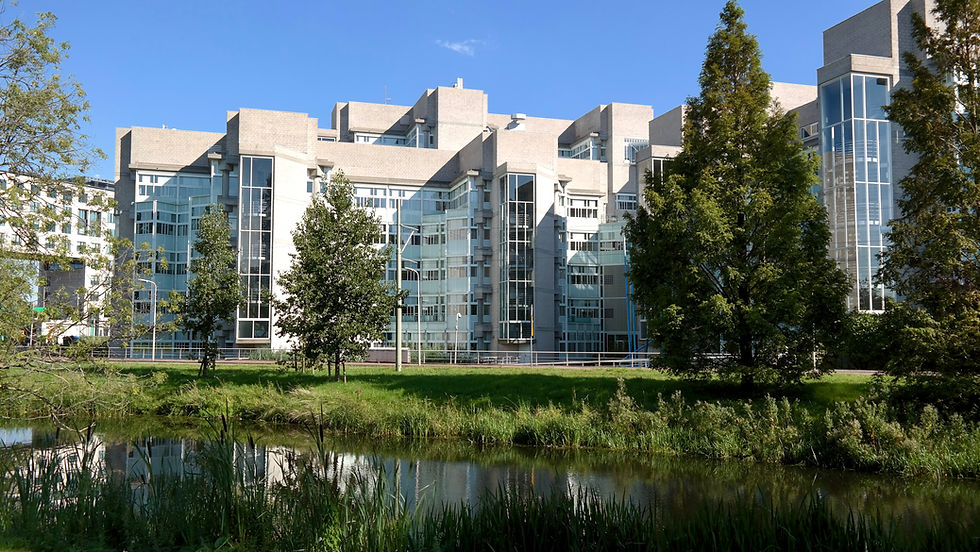
Photo: Former Ministry of Social Affairs at Anna van Hannoverstraat 4 in The Hague (Choinowski, 2015)


Those passing through The Hague by train may catch a glimpse of it. Anyone who gets off at Den Haag Laan van NOI Station has the chance to behold this example of Constructivism—unique in The Hague.Walk around it, experience how architect Herman Hertzberger brings volumes to life. Heights and depths alternate; the play of shadow and light on the facade—every moment of day is different; the color of the brick changes with the weather. The facade breathes with day.The volumes are composed in such a way that they let space and air through to the residential neighborhood behind. The building has been integrated into its surroundings with respect.Step inside and experience how Hertzberger plays with light and air. It's spacious,…